

Belts are one of those everyday items that we often take for granted, yet history of belts spans thousands of years, evolving from simple tools for survival to symbols of status, fashion, and even cultural identity.
The history of belts reveals how this accessory has adapted to human needs across civilizations, reflecting changes in technology, warfare, clothing styles, and societal norms. In this blog, we’ll explore the fascinating journey of belts through time, highlighting key milestones that have shaped their design and purpose.
Whether you’re a fashion enthusiast or a history buff, understanding the history of belts offers insights into how something so functional can become an enduring staple in wardrobes worldwide.
The history of belts dates back to the Bronze Age, roughly between 3300 and 1200 BC, when early humans first fashioned them from readily available materials like plant fibers, softened tree bark, and animal hides. These primitive belts were purely utilitarian, designed to carry tools, weapons, or secure clothing during daily tasks such as hunting or gathering.
Archaeological evidence suggests that belts were predominantly worn by men during this era, serving as essential survival aids rather than decorative pieces. In regions like ancient Mesopotamia and China, early belt buckles made from bronze appeared around 2000 BC, used to fasten clothing and hold weapons with basic, functional designs that prioritized durability over aesthetics.
As civilizations advanced, belts took on greater significance in military contexts. One of the earliest documented forms was the military girdle band, strapped around the waist to keep weapons securely in place during battle.
In ancient Greece and Rome, leather belts became popular among soldiers for their flexibility, which allowed freedom of movement, and their durability, providing some level of protection. The Roman “cingulum militare” was a prime example, a belt fastened around the waist to hold a dagger or sword, often decorated with studded leather strips that doubled as armor.
For Roman emperors and high-ranking officials, belts evolved into symbols of prestige, crafted from ornate gold fabric to secure togas and signify authority. Beyond the battlefield, belts held cultural meanings in other societies; for instance, in Mongolian tradition, exchanging belts sealed alliances, while among the Franks, capturing an enemy’s belt represented seizing power.
In ancient Egypt, belts were used for practical purposes like securing garments, with evidence from artifacts showing their integration into daily attire. This period marks the transition in the history of belts from mere necessities to items with symbolic value, setting the stage for their role in later eras.
Moving into the Middle Ages, the history of belts continued to intertwine with European culture and warfare. With the merging of various traditions, belts became more widespread, used to secure trousers, tunics, and robes. Knights and warriors attached scabbards to their belts for easy access to swords, while artisans and common folk employed them to carry tools, emphasizing their ongoing utility.
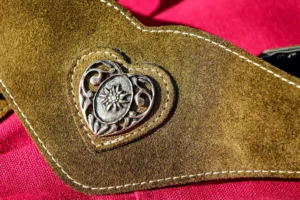
Belt buckles during this time grew larger and more decorative, often made from precious metals like gold or silver and adorned with jewels, heraldic symbols, or family crests to denote social status and wealth. In the western world, belts were more commonly associated with men’s clothing, though exceptions existed, such as during the early Middle Ages when women occasionally wore them.
By the Renaissance and early modern period in the 16th century, clothing styles began to shift. Breeches with buttons, buckles, or drawstrings reduced the necessity for belts to hold up garments, but they persisted as decorative accessories. Women’s use of belts also evolved; in the Middle Ages, they served utilitarian roles like carrying purses or fans, precursors to modern handbags, but gradually became style statements with the rise of skirts and dresses.
The late 17th century saw belts featured in women’s Mantua gowns, and between 1901 and 1910, they appeared in skirt/blouse combinations. Art Nouveau belt buckles from this era, with their intricate designs, have become sought-after collector’s items today.
In military contexts, belts remained symbolic. Officers in Prussia, Tsarist Russia, and other Eastern European nations wore extremely tight, wide belts over uniforms to support sabers and create an aesthetic of a trim waist, broad shoulders, and protruding chest, sometimes aided by underlying corsets, as noted during the Crimean Wars.
This practice was both uncomfortable and imposing, often satirized in political cartoons. The history of belts in this period underscores their dual role as functional gear and markers of hierarchy.
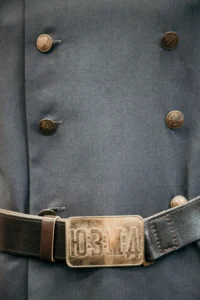 The 19th century brought significant changes to the history of belts, driven by the Industrial Revolution. Mass production made belts more accessible, using new materials like steel, brass, and eventually plastic for buckles. Belts remained integral to military uniforms, decorative yet practical for officers until World War I.
During the American Civil War, metal belt buckle plates featured artwork or abbreviations denoting army divisions or states, functioning as identity badges.
World Wars I and II further innovated belts, introducing utility designs with pouches and loops for carrying ammunition, tools, and gear, enhancing battlefield efficiency.
As trouser designs evolved, with waists lowering and belt loops appearing in the 19th century for sportswear, belts transitioned into civilian essentials. Before the 1920s, trousers often lacked loops, and belts were more decorative or military-linked.
However, by the 1920s, men widely adopted belts as standard accessories, matching the casual shift in fashion. Women’s belts gained traction from the 1930s, used with trousers and waist styles to add flair.
In some cultures, belts were even associated with discipline, used as improvised whips for corporal punishment, though this is discouraged in modern times.
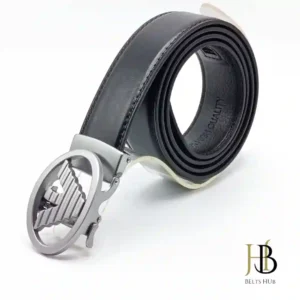 In the 20th century, the history of belts solidified their place as fashion staples. The standard leather belt with a metal buckle became ubiquitous through mass production, offering adjustability with evenly spaced holes and expressive buckles. Post-war, soldiers influenced civilian styles with rugged, practical designs, leading to a casual aesthetic.
Hollywood icons like James Dean and Jim Morrison popularized belts in rebellious, jeans-and-tee outfits, while Western films highlighted wide leather belts for cowboys. Subcultures such as bikers adopted ornate buckles to signify allegiance.
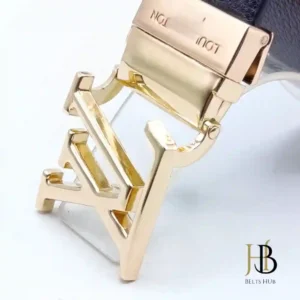
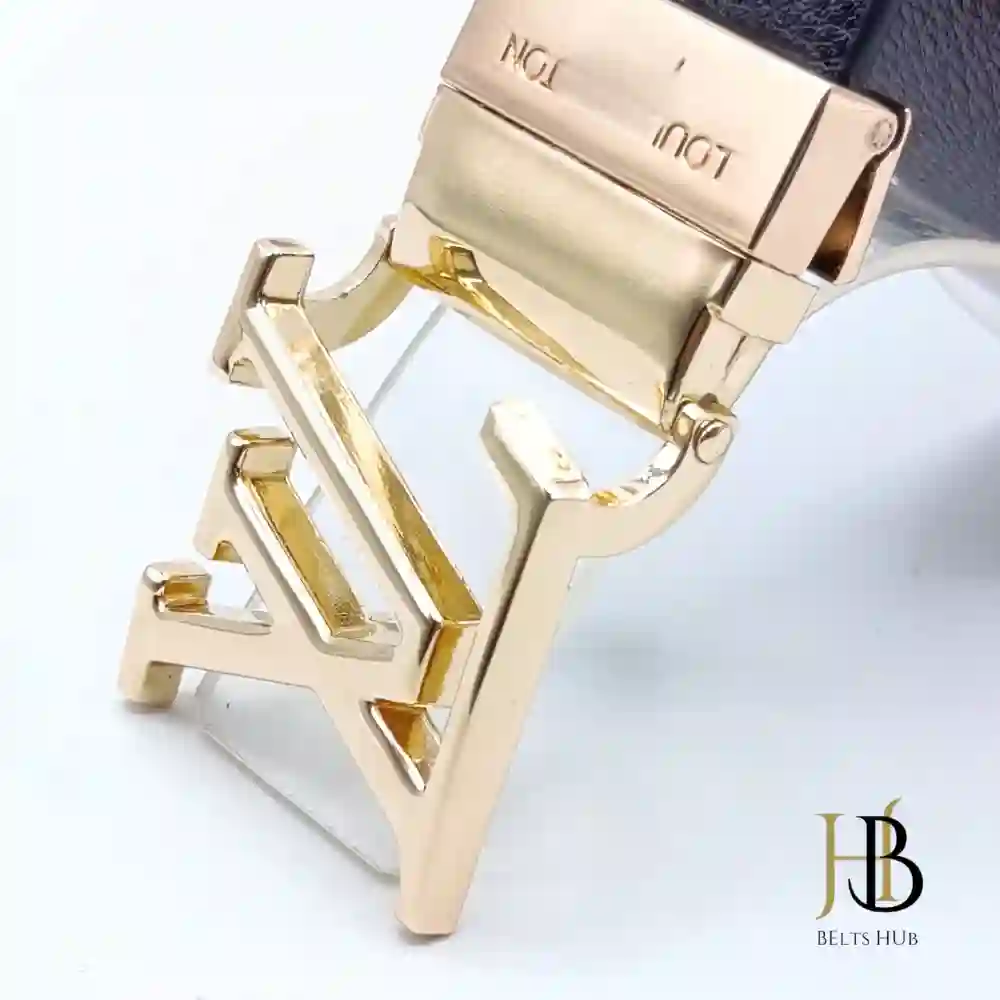
High fashion elevated belts further, with brands like Gucci, Hermes, and Louis Vuitton introducing logo-emblazoned buckles worn by celebrities and rappers. For women, figures like Michelle Obama demonstrated belts’ versatility over dresses, cardigans, and coats to harmonize outfits and flatter figures.
Today, belts come in diverse styles: classic, braided, elastic, wool, faux leather, and exotic varieties in countless colors. Men often match belts to shoes for formal looks, while functional tool belts endure for professionals.
Since the 1980s, trends like sagging pants, originating from prison prohibitions on belts for safety reasons, have influenced youth culture, with tightly fastened belts symbolizing gang affiliations. In sports, belts denote rank in boxing and martial arts. Contemporary innovations include sustainable materials for eco-conscious consumers, ensuring belts remain relevant.
The history of belts is a testament to human ingenuity, adapting from Bronze Age survival tools to modern fashion icons. Through wars, revolutions, and cultural shifts, belts have held more than just clothing, they’ve carried tools, signified status, and expressed identity.
As we look forward, belts will likely continue evolving with new materials and designs, but their core purpose remains timeless. Next time you buckle up, remember the rich history of belts that got us here.